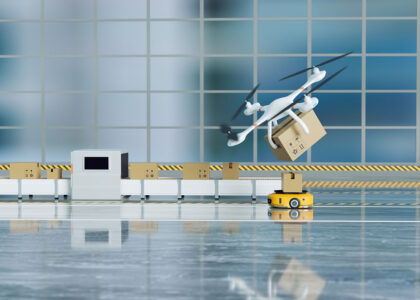


The logistics industry is evolving faster than ever. With rising customer expectations, global trade expansion, and rapid technological advancements, 2026 is expected to bring major changes in how logistics businesses operate. It’s no longer just about transporting goods—it’s about speed, transparency, sustainability, and smart systems.
Let’s look at what we can realistically expect from the logistics industry in 2026.
Increased Use of Automation and AI
Automation is already changing logistics, but by 2026, it will become even more common. From warehouse operations to route planning, businesses will rely heavily on AI-driven systems.
Tasks like inventory management, order processing, and shipment tracking will be more automated, reducing human errors and improving efficiency. AI will also help predict demand, optimize delivery routes, and identify potential delays before they happen.
This shift will allow companies to operate faster while keeping costs under control.
Real-Time Tracking Will Become Standard
Customers no longer accept uncertainty when it comes to deliveries. By 2026, real-time tracking will not be a premium feature—it will be a basic expectation.
Businesses will need to provide accurate updates at every stage of the supply chain. From warehouse dispatch to final delivery, transparency will be key.
This will not only improve customer satisfaction but also help businesses manage operations more effectively.
Strong Focus on Sustainability
Sustainability is becoming a major concern across industries, and logistics is no exception. In 2026, companies will be expected to reduce their carbon footprint and adopt greener practices.
This may include:
- Using electric or fuel-efficient vehicles
- Optimizing delivery routes to reduce emissions
- Reducing packaging waste
Customers and governments alike will push for environmentally responsible logistics solutions. Businesses that ignore this trend may struggle to stay competitive.
Growth of E-commerce and Faster Deliveries
E-commerce will continue to grow rapidly, and with it, the demand for faster deliveries. Same-day and next-day delivery services will become more common, even in smaller cities.
Logistics companies will need to build stronger last-mile delivery networks to meet these expectations. Speed and reliability will become key differentiators.
Businesses that can deliver quickly without increasing costs will have a clear advantage in the market.
Conclusion
The logistics industry in 2026 will be more digital, more transparent, and more customer-focused than ever before. Automation, real-time tracking, sustainability, and faster deliveries will define the future of logistics.
For businesses, the key will be to adapt early. Those who embrace these changes will not only improve their operations but also stay ahead of the competition.
In simple terms, the future of logistics is not just about moving goods—it’s about moving smarter, faster, and more responsibly.